

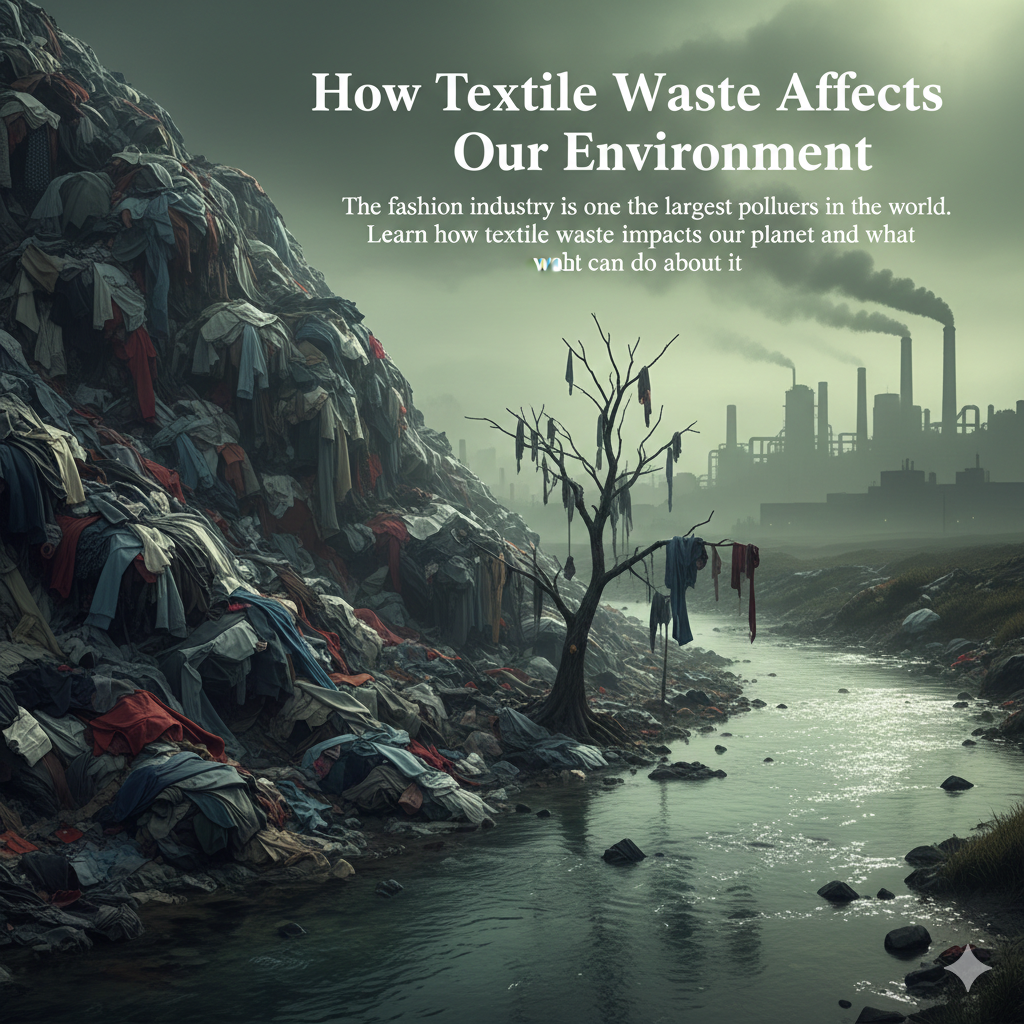
The fashion industry is one of the largest polluters in the world. Learn how textile waste impacts our planet and what we can do about it.
The fashion industry is one of the largest polluters in the world. Learn how textile waste impacts our planet and what we can do about it.
In 2026, the global conversation around fashion has shifted from “what’s trending” to “what’s remaining.” As we face the realities of a planet under pressure, the mountain of discarded clothing has become an impossible-to-ignore environmental crisis.
Every second, the equivalent of one garbage truck of textiles is landfilled or burned. With over 92 million tonnes of textile waste produced annually, the fashion industry has earned its reputation as the world’s second-largest polluter.
Here is a deep dive into how textile waste affects our environment and the steps we can take to fix a broken system.
The Hidden Cost of Your Wardrobe: Environmental Impacts
When we throw away a t-shirt, it doesn’t just “go away.” It enters a cycle of pollution that affects our water, air, and soil for centuries.
- Landfill Overload and Slow Decomposition
Most modern clothing is made from synthetic fibers like polyester, nylon, and acrylic. Since these are essentially plastic, they do not biodegrade.
Synthetics: Can take up to 200 years to decompose in a landfill.
Natural Fibers: While cotton or wool break down faster, they release methane—a greenhouse gas 28 times more potent than $CO_2$—when trapped in the oxygen-poor environment of a landfill.
- Microplastic Pollution in Our Oceans
Every time we wash synthetic clothes, they shed tiny plastic bits called microfibers.
The Scale: Textiles are responsible for roughly 35% of all microplastics found in the ocean.
The Food Chain: These microplastics are ingested by marine life and eventually find their way into human food systems, carrying toxic chemicals with them.
- Toxic Chemical Leaching
Textile production uses over 15,000 different chemicals, including lead, mercury, and arsenic used in dyes and finishing. As clothes sit in landfills or are dumped in rivers in manufacturing hubs, these toxins seep into the groundwater, poisoning local ecosystems and communities.
- Massive Water Consumption
The “waste” starts long before the bin. It takes approximately 2,700 liters of water to produce a single cotton t-shirt—enough for one person to drink for 2.5 years. When that shirt is discarded prematurely, all that water is essentially wasted.
The Rise of “Ultra-Fast Fashion”
In 2026, the problem has been accelerated by “ultra-fast fashion” brands. By releasing thousands of new styles daily, these companies encourage a “disposable” mindset where clothes are worn fewer than 7–10 times before being tossed.
Did you know? The fashion industry is responsible for 10% of global carbon emissions—more than all international flights and maritime shipping combined.
How We Can Fix It: Solutions for a Sustainable Future
The good news is that the “Circular Fashion” movement is gaining momentum. In 2025 and 2026, new regulations like the EU’s ban on destroying unsold clothing are forcing the industry to change.
What Consumers Can Do:
The 30-Wear Rule: Before buying, ask yourself if you will wear the item at least 30 times.
Buy Secondhand: Thrift stores and resale apps extend the life of a garment, reducing its carbon footprint by up to 82%.
Choose Mono-materials: Clothes made of 100% of one material (like 100% organic cotton) are significantly easier to recycle than blends.
Repair and Upcycle: Instead of throwing away a torn pair of jeans, try visible mending or turning them into something new.
What the Industry is Changing:
Textile-to-Textile Recycling: New technologies are finally allowing old polyester to be broken down and spun into high-quality “virgin-level” yarn.
Regenerative Agriculture: Growing fibers in ways that actually restore soil health and trap carbon.
Extended Producer Responsibility (EPR): Laws that hold brands financially responsible for the entire lifecycle of their products, including disposal.
Final Thoughts