
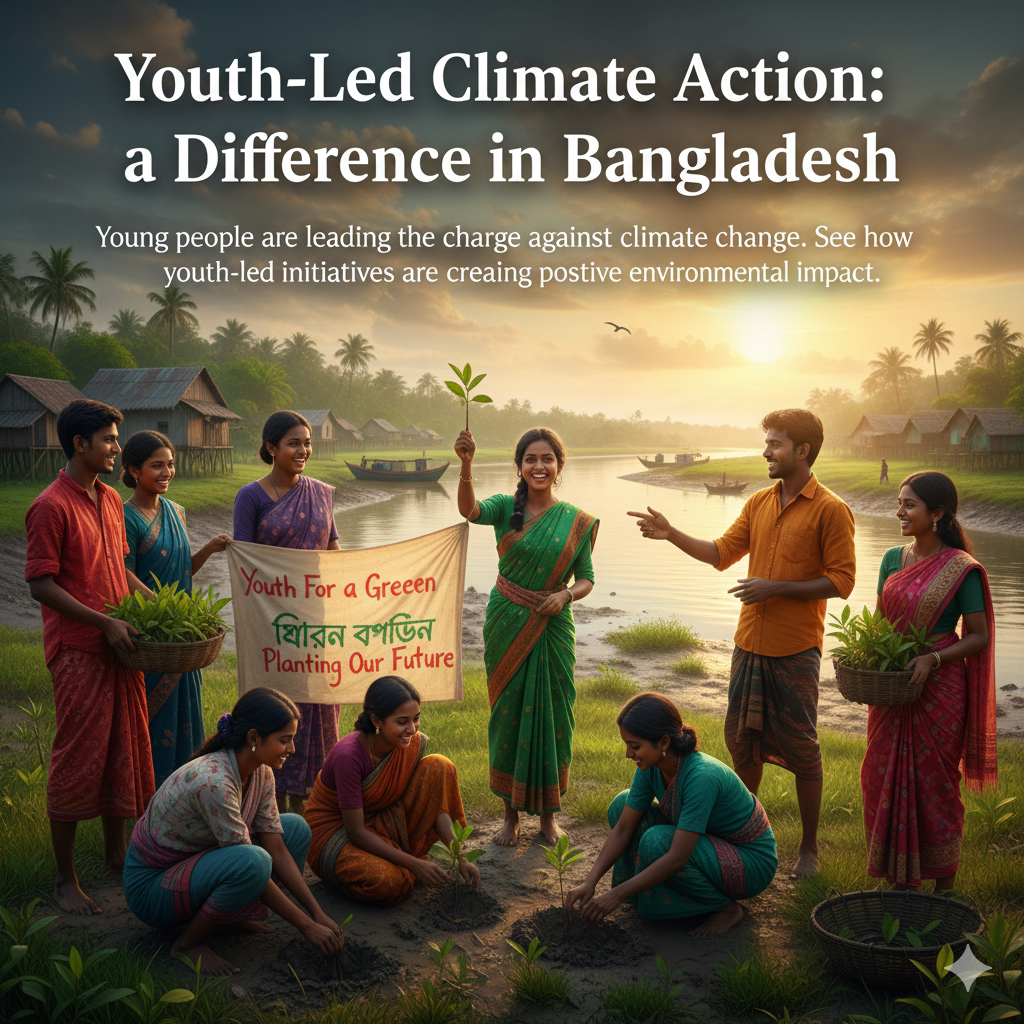
In Bangladesh—a country at the frontline of the climate crisis—the narrative is shifting from vulnerability to resilience. While the nation faces rising sea levels, salinity intrusion, and extreme weather, a new generation is refusing to be silent spectators. Young activists, students, and entrepreneurs are transforming anxiety into action, proving that youth leadership is the most potent tool for environmental survival.
1. Advocacy on the Global Stage: YouthNet for Climate Justice
YouthNet for Climate Justice, the largest youth-led network in the country, has become a formidable force. Led by activists like Sohanur Rahman, the network operates in over 50 districts, bridging the gap between grassroots struggles and international policy.
- COP Participation: Young representatives from Bangladesh have become staples at UN Climate Change Conferences (like COP28 and COP29), demanding “Climate Justice” and holding global polluters accountable.
- The “Manta Boat Rally”: In Barishal, youth organized unique water-based protests to spotlight the plight of fisherfolk and demand a transition to renewable energy.
- Policy Impact: Their persistent advocacy contributed to the Bangladesh government’s historic decision in 2025 to put children and youth at the heart of the NDC 3.0 (Nationally Determined Contributions) plan, a global first.
2. Fighting “Silent” Killers: The Lead Poisoning Victory
Climate action in Bangladesh often intersects with public health and industrial pollution. A standout success story involves the Pure Earth Youth Advocacy Forum.
In districts like Narayanganj and Narsingdi, youth activists documented the toxic impact of informal lead-acid battery recycling plants located near schools.
- The Outcome: Their evidence-based campaigning led to a Supreme Court order that permanently closed hazardous facilities, protecting thousands of children from lead poisoning and soil contamination.
3. Innovations in Adaptation: Green Micro-Enterprises
In the coastal belt, where salt-water intrusion has ruined traditional farming, young innovators are redesigning the local economy.
| Initiative | Impact |
| Spirulina Farming | Youth entrepreneurs in Shyamnagar are growing this nutrient-dense algae, which thrives in controlled environments, providing both food security and income. |
| Saline-Tolerant Crops | In Bagerhat, young farmers are piloting new rice varieties that survive high salinity, ensuring their communities can still harvest despite rising sea levels. |
| Mangrove Hackathons | Students from BRAC University and other institutions are developing AI and tech-based solutions to monitor and restore the Sundarbans’ protective mangrove shield. |
4. Edutainment: Changing Minds in the Classroom
Initiatives like BANGLALEADS are using “edutainment”—a mix of education and entertainment—to build climate literacy.
- School Champions: By using films, gamified workshops, and “plant stewardship” programs, they have turned hundreds of students in Chattogram into “Climate Champions.”
- Waste Segregation: These programs have led to immediate behavioral shifts, with students implementing waste segregation and plastic-reduction schemes in their own schools.
The Power of Intergenerational Equity
The success of these movements stems from a shift in perspective. Young people in Bangladesh no longer see climate change as a future problem; they see it as a current injustice. By integrating their voices into the national budget and disaster risk reduction plans, Bangladesh is setting a template for the rest of the world.
“We are not just the leaders of tomorrow; we are the frontline defenders of today.” — YouthNet Volunteer